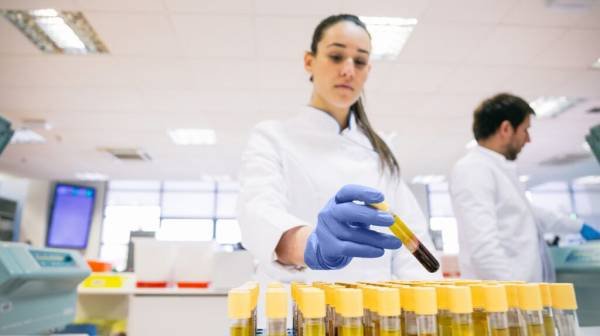
Share on PinterestA novel blood test could help spot prediabetes earlier. Image credit: Inuk Studio/Stocksy
- Researchers suggest they can use artificial intelligence (AI) to identify epigenetic markers and classify individuals into high-risk prediabetes groups.
- These epigenetic markers reflect underlying biological pathways linked to diabetes, inflammation, cardiovascular and kidney disease, and may predict future disease progression.
- A simple blood test could enable earlier and more personalized prevention, replacing complex clinical assessments and allowing targeted lifestyle or medical interventions for those at highest risk.
Prediabetes describes a health condition that raises the risk of developing type 2 diabetes. It occurs when an individual has higher than average blood glucose levels, but not high enough to be diagnosed as type 2 diabetes.
Evidence suggests that more than two in five U.S. adults have prediabetes, and diabetes remains a leading global cause of death.
Not only does prediabetes signify a high likelihood of progression to type 2 diabetes, but also increases the risk of other health complications, such as heart disease.
Early detection of prediabetes can signal interventions to delay or prevent type 2 diabetes onset and contribute to overall health and well-being.
Epigenetics refers to the study of reversible changes in gene expression that do not involve alterations to the underlying DNA sequence. A person’s epigenetics change in response to behavioral and environmental factors.
Growing research is highlighting the crucial role that epigenetic factors play in the development of type 2 diabetes, but also offer targets that could lead to more effective prevention and treatment strategies.
A new study from scientists affiliated with the German Center for Diabetes Research (DZD), published in Biomarker Research, suggests that a simple blood test, combined with AI, could help identify individuals at high risk of developing type 2 diabetes and its complications at an early stage.
By analyzing epigenetic markers in the blood, researchers were able to classify people into high- and moderate-risk groups with high accuracy, potentially paving the way for more personalized prevention strategies.
Epigenetics offers a biological fingerprint
In the study, researchers analyzed blood samples from participants across several study cohorts with known prediabetes risk profiles.
They focused on DNA methylation, an epigenetic process that influences how genes are turned on or off without altering the DNA sequence itself.
Using machine learning techniques, the team identified 1,557 epigenetic markers that together formed a biological
“fingerprint” of prediabetes risk.
Using these markers, the AI model was able to assign individuals to high-risk prediabetes clusters with an accuracy of about 90%, even when tested in an independent validation cohort.
“Identifying individuals at elevated risk for diabetes has significant practical implications. Early disease diagnosis and intervention can prevent or delay type 2 diabetes onset and potentially lessen the clinical and economic burden,” lead study author Meriem Ouni, PhD, told Medical News Today.
“These blood-based epigenetic classifiers offer strong prognostic potential for identifying individuals at high risk of diabetes and its complications, providing a more accessible and cost-effective alternative to complex clinical assessments.”
— Meriem Ouni, PhD
Many of the epigenetic markers were specific to particular clusters and reflected different biological signaling pathways. Several had already been linked in earlier studies to type 2 diabetes, chronic inflammation, cardiovascular and kidney disease.
This suggests that epigenetic differences may help explain why prediabetes presents so differently between individuals.
Why risk assessment in prediabetes matters
Doctors consider prediabetes a critical window for intervention. Lifestyle changes, such as increased physical activity and dietary adjustments can help delay or even prevent the onset of type 2 diabetes. In some cases, these measures can even lead to remission.
However, not everyone with prediabetes faces the same level of risk. Some individuals may never develop diabetes, while others are likely to progress quickly or experience complications.
Without reliable tools to distinguish between these groups, clinicians may struggle to determine who needs intensive intervention and who may benefit from lighter monitoring.
Previous research conducted by the DZD divided prediabetes into at least six distinct clusters. These clusters differ in metabolic characteristics, disease progression, and risk of complications.
Three clusters are associated with moderate risk, while the other three carry a high risk of developing type 2 diabetes and related complications.
Ouni explained that identifying these clusters typically requires extensive clinical testing that is impractical for routine clinical use, noting that “a comprehensive assessment requires specialized clinical expertise, expensive medical tests, and significant time investment.”
“Currently, assessing diabetes risk remains largely confined to clinical research and is not integrated into a widespread screening strategy,” she told us. “This approach necessitates a large number of expensive clinical tests and measurements, and crucially relies on patient cooperation.”
“Not all participants are willing to spend extended periods in the clinic to complete these evaluations; for example, an oral glucose tolerance test typically requires at least one and a half hours. Instead, we propose a single blood draw for DNA methylation profiling to distinguish between high- and low-risk individuals,” added Ouni.
“Blood-borne biomarkers for prediabetes offer the advantage of eliminating the need for time- and resource-intensive tests such as the oral glucose tolerance test,” the researcher emphasized.
“This approach could extend risk stratification to broader populations and represents a promising step toward developing noninvasive tests to identify individuals at high risk of diabetes and its complications,” she said.
Toward simpler, more targeted prevention
According to the researchers, the epigenetic markers reflect more than a person’s current metabolic health. They can also provide clues about how the disease might progress in the future and identify individuals with a particularly high risk of type 2 diabetes and complications early on.
“[W]e believe that these markers are predicting later onset of metabolic deteriorations such as elevated blood glucose levels as well as [type 2 diabetes] complications,” Ouni told MNT.
According to her, “these markers have a high potential to detect future complications and this will be further confirmed in our future research.”
The next steps of research will involve translating these findings into a practical diagnostic tool, which may enable fast and cost-effective testing in routine practice.
A standardized blood test could offer a practical way to assess risk in everyday healthcare settings. Such a test could be especially valuable in preventive medicine, allowing healthcare professionals to intervene earlier and tailor personalized prevention strategies more effectively, while avoiding unnecessary interventions for lower-risk individuals.