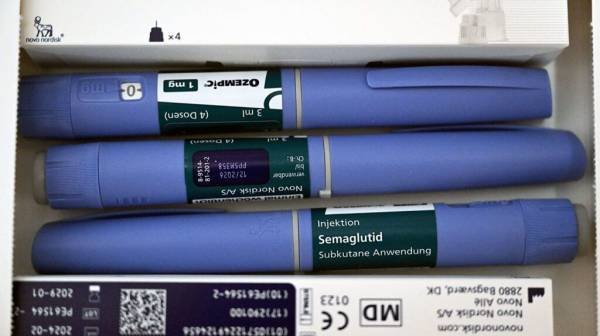
Share on PinterestA new study observed that people taking GLP-1 drugs had improved asthma symptoms. Felix Hörhager/picture alliance via Getty Images
- Researchers based in the United Kingdom recently examined how GLP-1 agonist drugs impact asthma in people with obesity.
- People taking GLP-1 medications had better-controlled asthma overall, though there was no difference in lung function compared to those not taking GLP-1s.
- The study suggests that GLP-1 drugs may have anti-inflammatory effects that benefit the lungs.
Healthcare providers often prescribe GLP-1 drugs such as semaglutide (Ozempic and Wegovy) or liraglutide (Victoza and Saxenda) for type 2 diabetes control and weight loss. As these medications increase in popularity, researchers are looking into other ways these drugs can be useful.
Recent research shows that GLP-1 medications may reduce obesity-related cancer risk and may lower dementia risk.
Researchers from the University of Aberdeen and the Observational and Pragmatic Research Institute in the United Kingdom recently examined how these medications impact asthma control in people with obesity.
They found that people taking GLP-1 medications had better-controlled asthma overall.
The findings are published in the journal Advances in Therapy.
Examining how GLP-1 drugs impact asthma
GLP-1 receptor agonists are a type of medication that mimic the hormone glucagon-like peptide-1 to help regulate blood sugar, increase insulin secretion, reduce gastric emptying, and increase appetite satiety.
These medications treat type 2 diabetes and assist in weight loss in people who are either overweight or have obesity. GLP-1s have shown anti-inflammatory effects, and since an inflammatory response triggers asthma, researchers in the current study wanted to see what effects these medications have on people with obesity and asthma.
The study examined around 60,000 people, including more than 10,000 people with both obesity and asthma taking GLP-1 drugs and around 50,000 matched controls. The researchers used data from the Optimum Patient Care Research Database.
In order to qualify for inclusion in the study, the participants needed to have had an asthma consultation in the 12 months before starting the GLP-1 medication. They also had to be at least 18 years old and have a body mass index (BMI) of more than 30, which indicates obesity.
Each participant in the GLP-1 group was matched 5:1 with participants who had similar characteristics but had not taken GLP-1 medications.
People on GLP-1 drugs had marked asthma improvement
The researchers used an average of 3 years of follow-up data to determine how well people with asthma who were on GLP-1 medications did compared to people in the matched group.
They used the participants’ baseline risk domain asthma control (RDAC) and overall asthma control (OAC) scores and compared these to scores taken during follow-up.
While the GLP-1 group had a higher average BMI and worse asthma control before starting the GLP-1 drugs, they had “significant” improvements in their asthma scores after being on the GLP-1 medication for a year.
The GLP-1 group did not differ much from the matched group at the end of the study in terms of lung function. The authors point to missing data due to the COVID-19 pandemic on this measurement.
“Obese asthmatics are unique in that they are often steroid-resistant, and it is possible that mechanistic differences in obese asthmatics and weight loss with GLP1 may have pleomorphic effects on inflammation beyond just weight loss,” the study authors noted.
Overall, the study findings demonstrate that GLP-1 medications have the potential to positively impact asthma in people with obesity. Further research is needed, though, especially to determine whether these medications can one day be used to treat respiratory issues.
Experts disagree on whether GLP-1 contributes to asthma control
Jimmy Johannes, MD, pulmonologist and critical care medicine specialist at MemorialCare Long Beach Medical Center, spoke with Medical News Today about the study.
“This study further supports the link between weight loss, in this case with GLP-1 drugs, and improved asthma control,” said Johannes. “It also raises the possibility that GLP-1 drugs may be helpful for the treatment of asthma.”
Johannes discussed the mechanism by which the GLP-1 drugs improved asthma and noted that there are GLP-1 receptors in the lungs.
“GLP-1 receptor agonists may be able to directly reduce the inflammation and airway hyperresponsiveness that contribute to asthma,” Johannes explained.
Thomas Kilkenny, DO, director of the Institute of Sleep Medicine, Pulmonary & Critical Care at Northwell’s Staten Island University Hospital, also spoke with MNT about the study.
Kilkenny did not think the study adequately demonstrated that GLP-1 medications were responsible for the improved asthma control and suggested that the improvements could be related to weight loss.
Is it GLP-1s or weight loss?
“It has been shown multiple times in the past, and various studies show that weight loss alone improves asthma control. This study did not comment on whether the GLP-1 medication had a direct effect on the physiology of asthma control.”
— Thomas Kilkenny, DO
Kilkenny explained that weight loss alone improves asthma control for several reasons, including “a decrease in the low-grade inflammation that is associated with obesity.”